
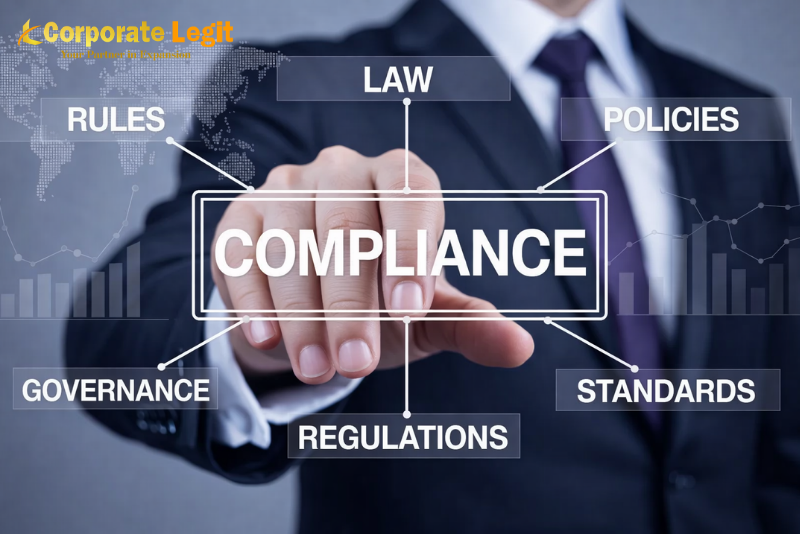
Legal compliance and secretarial work might look like basic paperwork, but ignoring these duties can destroy your business. Poor Secretarial & Corporate Legal Compliance exposes companies to massive fines, regulatory action, and long-term operational risks. Your company could face penalties running into millions if compliance requirements are ignored, especially in heavily regulated industries. In extreme cases, businesses may even be forced to shut down.
Many business owners underestimate how quickly routine governance tasks become complex in India’s regulatory environment. Weak compliance practices often result in missed filings, governance gaps, and increased regulatory scrutiny. Research shows that businesses with structured compliance frameworks face fewer shareholder disputes and regulatory violations. A well-defined governance approach helps organizations meet legal obligations efficiently, maintain good corporate standing, and reduce long-term legal exposure.
This piece reveals the hidden costs of poor compliance and explains how strategic failures happen when you ignore legal obligations. You’ll also find practical ways to protect your business. Every business owner needs to understand these hidden costs to succeed, regardless of whether you run a small startup or lead an established corporation.
Understanding the scope of corporate legal compliance
Legal compliance is the foundation that enables businesses to operate lawfully and ethically in India. Effective Secretarial & Corporate Legal Compliance goes far beyond checking regulatory boxes – it ensures accountability, transparency, and governance discipline.
What is company law compliance in India?
Indian corporate law creates a structure that businesses need to operate, manage, regulate, and dissolve. Company law compliance means following all applicable laws, regulations, and internal policies to run ethical and legal operations.
The Companies Act of 2013 replaced the 1956 version as the main legislation for corporate entities in India. This detailed legislation works with rules and guidelines from regulatory bodies like the Ministry of Corporate Affairs (MCA) and the Securities and Exchange Board of India (SEBI).
Companies must file annual returns, conduct statutory audits, maintain proper accounting systems, protect shareholder rights, and meet directors’ fiduciary duties. The law also requires regular board meetings, proper documentation, and following industry-specific regulations.
Key responsibilities of a corporate secretary
A corporate secretary acts as the governance backbone of any organization. People often call them the “glue” that holds a corporation together. Their role has grown a lot from just handling administrative duties.
The secretary makes sure the company meets regulatory and statutory requirements while carrying out Board decisions.
Here’s what they do:
- Organize board and committee meetings.
- Prepare and maintain minutes and corporate records.
- Make sure federal and provincial board governance laws are followed.
- Act as a governance liaison for officers and directors
- Handle subsidiary compliance and shareholder involvement.
The core team needs analytical skills, management capabilities, discretion with confidential information, and excellent communication abilities. They also guide board directors about their fiduciary duties.
Why compliance is more than just paperwork
Smart businesses never treat compliance as a box-ticking exercise. It creates real value beyond following regulations. Companies that maintain proper compliance face fewer shareholder class action lawsuits and regulatory violations.
Good compliance builds trust with customers and employees and shows steadfast dedication to ethical behavior. So businesses that focus on compliance see improved productivity and lower risk of legal and reputation damage.
Compliance builds the reputation and brand image of organizations. It protects business resources, keeps investor confidence high, and helps sustainable growth. Looking at it strategically, compliance becomes a chance to create long-term business value rather than a burden.
Hidden risks that escalate over time
Ignoring compliance is like sitting on a ticking time bomb. Small lapses in Secretarial & Corporate Legal Compliance – missed filings, outdated registers, or incomplete disclosures – can snowball into major legal crises.
- Regulatory violations that go unnoticed
Companies often have compliance gaps they don’t spot until it’s too late. Business owners might think some requirements are trivial – like updating compliance manuals, meeting filing deadlines, or keeping complete records. But regulators take these technical requirements seriously during investigations. On top of that, these oversight failures take away from growth and breakthroughs as leaders spend their time fixing problems instead.
- Piercing the corporate veil and personal liability
Limited liability has its limits. Courts can “pierce the corporate veil” and make shareholders or directors personally responsible for their company’s debts. This happens with serious misconduct, like mixing personal and business money or not having enough capital at startup. Yes, it is rare for courts to pierce the veil, but bad actions can strip away your protection.
Courts in Florida, Alaska, Nevada, and New York use different tests but look for these red flags:
- The corporation acts as the shareholders’ alter ego.
- Improper conduct or fraud
- Too much control without proper corporate formalities
Compliance officers face bigger personal risks now. Federal agencies have stepped up their game since 2015, pushing for criminal charges and civil penalties against compliance staff more often.
- Compounding penalties and interest on late filings
Late filing penalties grow faster than you’d think. The IRS charges 5% of unpaid tax each month when returns are late (up to 25%), with a minimum $510 penalty for returns over 60 days late. Late payment fees add another 0.5% monthly, potentially hitting another 25% over time. Interest adds up daily on these amounts, and the total can end up bigger than your original tax bill.
Strategic failures due to poor compliance
Beyond fines, poor Secretarial & Corporate Legal Compliance directly impacts business strategy and growth potential.
- M&A deals collapse during due diligence
- Market expansion is blocked due to the loss of good standing.
- Boards lose effectiveness due to governance failures.
Non-compliance limits strategic options and weakens competitive positioning.
- Missed M&A or restructuring opportunities
Major deals and acquisition opportunities often fall apart due to compliance problems. Many companies fail to realize how compliance issues affect M&A valuations and negotiations. Non-compliance becomes a major red flag during due diligence that can stop transactions dead in their tracks. Deals that move forward typically require price adjustments, special warranties, or remediation as conditions. Companies going through M&A face increased regulatory scrutiny at their most vulnerable time.
- Inability to expand into new markets
Your business expansion plans hit a wall when compliance failures affect your good standing. State authorities might revoke your right to conduct business, which blocks registration in new states or countries. This challenge multiplies when you try to enter multiple markets at once, as each jurisdiction has its own requirements. Companies that don’t ask regulators early enough get pricey delays and market entry barriers.
- Breakdown in board governance and decision-making
Boards tend to ignore compliance until problems surface. This reactive mindset leads to governance failures during critical business changes like vertical expansion or entering new territories. Research shows that not following prescribed governance codes doesn’t always result in poor governance. Notwithstanding that, boards that neglect compliance and risk oversight responsibilities end up limiting their organization’s strategic choices.
Smart solutions to avoid compliance pitfalls
Companies can transform secretarial & corporate legal compliance into a competitive advantage by adopting proactive solutions.
- Utilizing entity management software
Entity management systems offer a complete framework that streamlines global corporate compliance. These digital platforms put all your data in one place and automate compliance tasks for better visibility of your entity portfolio. The best systems come with customizable calendars that alert you, organize documents automatically, and include role-based security settings. Companies can reduce their exposure to fines, audits, and reputation damage through better governance.
- Hiring Compliance Experts for Specialized Needs
Expert knowledge makes a significant difference in specialized compliance requirements. Your company might need to outsource legal and compliance recruitment when hiring gets challenging, specific legal talent is required, or regulatory changes demand quick scaling. Professionals experienced in company law compliance in India can help fill specialized roles that align with local standards and ensure your business remains fully compliant.
- Creating a compliance calendar and tracking system
A well-laid-out compliance calendar shows your key filing duties, deadlines, and team responsibilities. Regular reminders at 90 days, 45 days, and one week before deadlines help you stay on track. The calendar needs regular updates to reflect changing requirements. This simple tool helps avoid costly mistakes – IRS filing delays alone can cost up to $50,000.
- Integrating compliance into business strategy
Smart companies treat compliance as more than just a checklist. They make it part of their business goals. This approach connects compliance targets with business objectives and brings leadership into compliance discussions. Compliance then becomes a growth driver rather than just a way to avoid penalties.
Conclusion
Legal compliance means much more than just filling out forms. Poor compliance practices can expose businesses to regulatory penalties, reputational damage, governance failures, and missed expansion opportunities. Treating Secretarial & Corporate Legal Compliance as a strategic safeguard rather than a routine obligation helps protect leadership, maintain investor confidence, and ensure long-term stability.
By integrating compliance into core business strategy, organizations can remain agile and resilient in India’s evolving regulatory environment. With the right expertise and structured frameworks, compliance becomes a source of strength rather than risk. Corporate Legit supports businesses in building robust governance systems that enable sustainable, compliant, and confident growth.
Frequently Asked Questions (FAQs)
1. What is Secretarial & Corporate Legal Compliance?
Secretarial & Corporate Legal Compliance ensures businesses follow corporate laws, maintain proper governance, meet statutory filings, and uphold regulatory standards in India.
2. Why is Secretarial & Corporate Legal Compliance important for businesses?
It protects companies from penalties, reputational damage, legal disputes, and governance failures while supporting sustainable growth and investor confidence.
3. What are the common risks of poor corporate compliance?
Risks include missed statutory filings, shareholder disputes, regulatory scrutiny, loss of market expansion opportunities, and even personal liability for directors.
4. How can companies improve their Secretarial & Corporate Legal Compliance?
Businesses can adopt compliance calendars, use entity management software, hire compliance experts, and integrate compliance into their overall business strategy.
5. Are there specific laws governing corporate compliance in India?
Yes, the Companies Act, 2013, rules from the Ministry of Corporate Affairs (MCA), and SEBI regulations form the foundation of corporate compliance in India.